FA HAS JUST RESPOND TO NOTTINGHAM FOREST SOCIAL MEDIA POST AS THEY REVEALS THE REASON WHY TARKOWSKI WASN’T GIVEN RED CARD
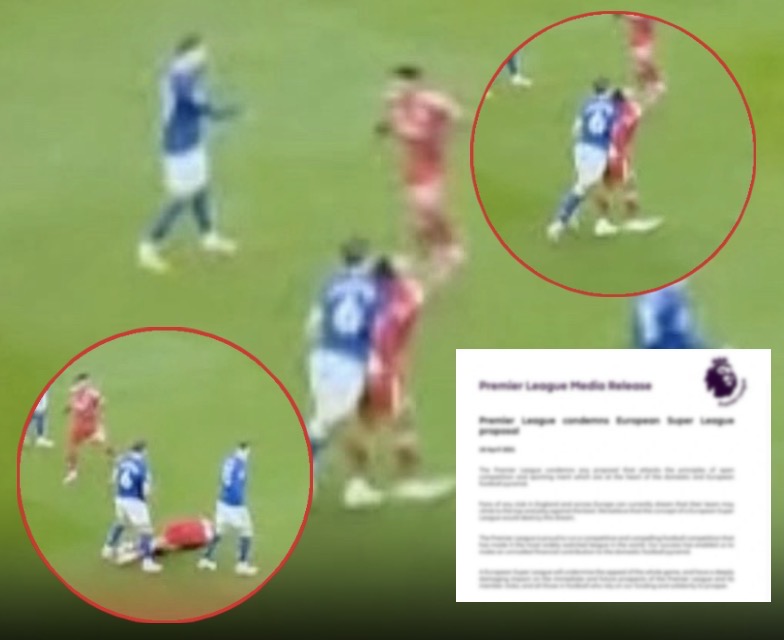
The fallout from the fiery Premier League clash between Nottingham Forest and Everton has taken yet another dramatic turn, as the Football Association (FA) has officially responded to Nottingham Forest’s explosive social-media post concerning the controversial incident involving James Tarkowski. The Forest camp, already furious after what they considered a clear red-card offense, publicly questioned the decision-making process—forcing the FA to break their silence and provide a detailed explanation that has only fueled more debate across English football.
The incident in question—now circulating widely on social platforms—shows Everton defender James Tarkowski colliding heavily with a Nottingham Forest player, leaving fans, pundits, and the Forest hierarchy calling for severe punishment. Despite the intensity of the challenge and the reactions it sparked, the on-field referee issued no red card, a decision that VAR later reviewed and chose not to overturn. That moment ignited an online firestorm, particularly when Nottingham Forest published a strongly worded statement demanding full transparency from the authorities.
Now, after hours of speculation and growing pressure, the FA has publicly addressed the matter—and their explanation has left many supporters stunned.
FOREST’S STATEMENT FORCES AN UNPRECEDENTED RESPONSE
Nottingham Forest’s initial statement, posted across their official social channels, accused the match officials of “neglecting clear and obvious evidence” and described the tackle as “dangerous, reckless, and unacceptable at Premier League level.” The club insisted that Tarkowski’s challenge jeopardized player safety and called for “urgent clarification” regarding why no red card was issued.
The post, bold and unusually confrontational, immediately went viral. Forest fans applauded the club for standing up against what they perceived as consistent poor officiating, while supporters of rival clubs debated whether the tackle truly met the criteria for violent conduct. Within hours, hashtags related to the incident topped English football trends, prompting pundits and former referees to weigh in.
As pressure mounted, the FA was left with little choice but to respond—and their official explanation was finally released earlier today.
FA: “THE INCIDENT DID NOT MEET THE THRESHOLD FOR SERIOUS FOUL PLAY”
According to the FA’s statement, the key reason behind Tarkowski avoiding a red card lies in what they described as “the interpretation of force, intent, and point of contact.” The association noted that although the collision appeared forceful at full speed, the VAR team had multiple video angles that the public did not immediately see.
The FA outlined three main factors behind the decision:
1. Point of Contact Was Not Considered Excessively Dangerous
The report explains that while Tarkowski made strong contact, the initial point of impact was not judged to be high enough or forceful enough to constitute serious foul play. The FA argued that the challenge began low and did not show the studs making direct contact in a manner deemed dangerous under Law 12 of the game.
This reasoning has been met with widespread skepticism, especially from Forest supporters who continue to point to screenshots and slowed-down footage circulating online. Many argue that the FA’s interpretation downplays the severity of the moment, but the officials stand firm.
2. Tarkowski’s Momentum Was Considered Part of a “Natural Defensive Action”
Another surprising justification from the FA is their insistence that Tarkowski’s movement was characteristic of a defender attempting to win the ball—not one attempting to injure an opponent. According to the statement, “there was no clear evidence of malicious intent,” and the collision was largely the result of both players contesting the ball in a high-tempo exchange.
This phrasing has not gone unnoticed among analysts. Several former referees have already questioned the FA’s continued reliance on intent, arguing that serious foul play is defined by endangering the safety of an opponent, not what the player meant to do.
3. VAR Determined That the On-Field Decision Was Not a “Clear and Obvious Error”
This is perhaps the most controversial part of the explanation.
The FA revealed that while the VAR team did review the incident, they did not feel the referee’s initial decision—a no-card call—was so clearly wrong that it required an intervention. According to protocol, VAR cannot re-referee the match; it can only step in if the original decision was “clearly and obviously incorrect.”
The FA insists that the incident fell within the “gray area” of challenges that can be interpreted differently by different officials—therefore not triggering the threshold for VAR to overturn the referee’s on-field decision.
This final justification has left many supporters exasperated, accusing the FA of hiding behind technicalities rather than acknowledging inconsistencies in officiating.
FOREST FANS OUTRAGED: “THE FA IS PROTECTING ITS OWN”
As expected, Nottingham Forest fans have reacted with outrage. Social media comments range from frustration to outright disbelief, with thousands claiming the FA is bending over backward to defend refereeing decisions rather than admitting mistakes.
Some supporters have gone as far as calling for transparency measures such as releasing VAR audio publicly—an idea several pundits have championed in recent years but which the FA has resisted.
Others argue that Forest have suffered from questionable decisions throughout the season and that this latest incident highlights deeper issues within English officiating.
PUNDITS SPLIT ON THE FA’S JUSTIFICATION
Football experts across major networks are divided.
Some, like former referee Dermot Gallagher, support the FA’s stance, insisting the challenge was “borderline but not a definite red.” However, others argue that the angle shown during the live broadcast clearly illustrated reckless force worthy of dismissal.
A number of pundits have pointed out that challenges with similar levels of contact have resulted in red cards earlier in the season—fueling allegations of inconsistency.
WHAT’S NEXT? WILL FOREST FACE SANCTIONS FOR THEIR POST?
Interestingly, the FA’s response also subtly hinted that Nottingham Forest could face disciplinary measures for the tone and content of their earlier statement. The governing body mentioned its expectation that clubs “uphold respect for match officials and refrain from comments that may undermine the integrity of officiating teams.”
While no final decision has been made, several insiders predict a fine is likely, especially if the FA views Forest’s post as inflammatory.
This possibility has further aggravated an already frustrated fanbase that believes the club is being punished simply for demanding fairness.
CONCLUSION: THE DEBATE IS FAR FROM OVER
The FA may have provided its official explanation, but the controversy surrounding Tarkowski’s non-red-card incident remains far from settled. Nottingham Forest supporters continue to demand accountability, pundits remain divided, and the football community is once again questioning the consistency of Premier League officiating.
One thing is certain: this storm is not dying down anytime soon. The FA’s explanation, rather than extinguishing the flames, has only added more fuel to a debate that has long been simmering beneath the surface.
And as the season progresses, the pressure on officials—and the scrutiny over every major decision—will only intensify.






Post Comment