Westham fans have given up on one player who’s ‘fallen off a cliff after Brighton draw
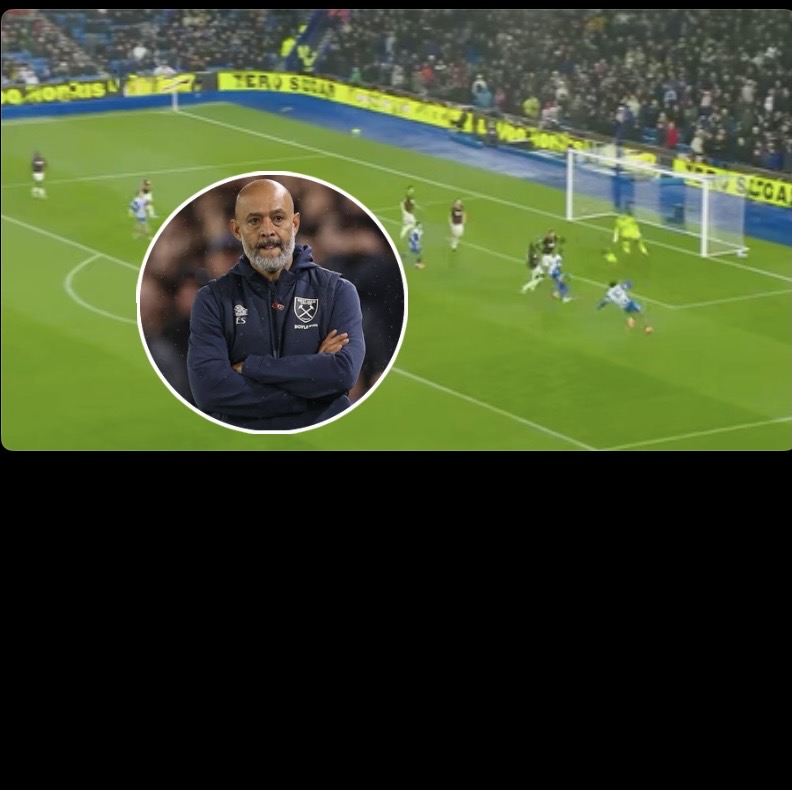
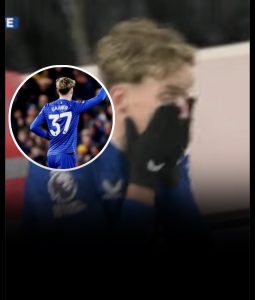
The drizzle at the Amex Stadium hung heavy in the air like a shroud over West Ham United’s fragile Premier League survival bid, turning what should have been a gritty point into a gut-wrenching missed opportunity. On a blustery December afternoon, the Hammers clawed their way to a 1-1 draw against Brighton & Hove Albion, but the result felt like two points squandered rather than one salvaged. Jarrod Bowen’s exquisite 73rd-minute strike had ignited dreams of escape from the relegation mire, only for Georginio Rutter’s controversial 91st-minute equalizer to yank them back down. Yet, amid the VAR debates and Nuno Espirito Santo’s post-match fury over a perceived high boot on Dinos Mavropanos, the real storm brewing was among the traveling Irons faithful. Their ire wasn’t directed at the officials or the Seagulls’ late resilience it was laser-focused on one of their own: Crysencio Summerville, the once-prodigious winger whose season has unraveled into a cautionary tale of hype unmet and promise unfulfilled.
Summerville’s tenure at West Ham has been a rollercoaster of inflated expectations and deflating realities, but the Brighton stalemate marked a nadir that even the most optimistic supporters could no longer ignore. Signed from Leeds United in a £25 million deal last summer, the Dutch speedster arrived with the weight of Europa League heroics on his shoulders 13 goals and nine assists in the Championship, a flair for the dramatic that had scouts salivating. West Ham, under the stewardship of a board desperate to inject dynamism into a squad adrift in mid-table mediocrity, viewed him as the spark to ignite their ambitions. Early whispers from the London Stadium suggested as much: a blistering debut assist against Aston Villa, a curling effort that kissed the post in the derby loss to Tottenham. Fans etched his name into chants, envisioning him as the heir to the creative throne vacated by the likes of Said Benrahma and Pablo Fornals.
But as autumn bled into winter, the narrative shifted. Summerville’s integration into Nuno’s pragmatic, counter-attacking system emphasizing defensive solidity over flamboyant flourishes exposed cracks in his game that Leeds’ wide-open Championship had concealed. The Premier League’s unforgiving pace demanded more than raw pace and audacious dribbles; it required end product, composure under duress, and a willingness to track back that Summerville seemed loath to provide. By November, his statistics painted a damning picture: just two goals and a solitary assist in 14 appearances, a goals-per-90-minute rate plummeting below 0.2. Missed chances piled up like unpaid billsa sliced volley against Manchester United that sailed into the Stretford End, a wayward cross in the Liverpool draw that left Michail Antonio shaking his head. Teammates praised his work rate in private, but on the pitch, his decision-making faltered, turning potential into peril.
The Brighton match encapsulated this descent with brutal clarity. Deployed on the left flank in Nuno’s 4-2-3-1, Summerville was tasked with stretching Brighton’s backline, exploiting the spaces left by Ferdi Kadioglu’s overlapping runs. For the first half, he flickered with promise: a darting run in the 22nd minute that forced a hurried clearance from Lewis Dunk, a teasing cut-back that found Lucas Paqueta in acres of space. The away end, a hardy contingent of 3,000 clad in claret and blue, murmured approval. “Sum-mer-ville!” they trilled, clinging to the memory of his pre-season sizzlers.
Yet, as the game wore on and West Ham’s low block absorbed Brighton’s possession-heavy probes 64% ball control for the hosts, zero shots on target until the final 20 minutes.Summerville’s frailties crystallized. In the 58th minute, a golden opportunity arose: Bowen’s pressing won the ball high, Paqueta threaded a through-ball, and there was Summerville, one-on-one with Bart Verbruggen. The keeper rushed out, narrowing the angle, but Summerville’s finish a tame side-foot that rolled agonizingly wide drew groans that echoed louder than the wind whipping off the English Channel. Replays showed his body opening up too early, telegraphing intent to the backpedaling Dunk. It wasn’t just a miss; it was a microcosm of his season, a hesitation born of overthinking in a league that punishes the indecisive.
The frustration boiled over in the 67th minute, another chance squandered. Aaron Wan-Bissaka’s long diagonal found Summerville in stride, beating Jan Paul van Hecke to the byline. With the goal gaping after Verbruggen’s premature dive, he opted for a lofted chip that cleared the bar by a yard, eliciting a collective slump in the stands. Social media, that modern barometer of fan sentiment, ignited instantaneously. “Summerville’s done more for Brighton’s defense than their own players today,” tweeted @HammerAndSick, a post that garnered 5,000 likes within the hour. “Terminate his contract. £25m on a player who can’t hit a barn door? Espirito Santo’s lost the plot,” fired back @IronsInExile, echoing a sentiment rippling through Hammers forums like West Ham Way and KUMB.
By full time, with Rutter’s handball-adjacent scramble snatching parity— a goal that VAR deemed legal because the initial contact wasn’t “immediately prior” to the finish—the opprobrium had reached fever pitch. Nuno, in his presser, deflected with diplomatic vagueness: “Crysencio’s young, he’s learning the demands. We need everyone pulling together now.” But the supporters weren’t buying it. Post-match polls on Hammers News showed 78% demanding a January sale, with comments sections overflowing: “Fallen off a cliff since August. All pace, no brains,” wrote one. “Bowen’s carrying this team on his back while Summerville jogs around like he’s on holiday.” The vitriol extended to X, where #SummervilleOut trended locally, amassing over 12,000 mentions in the 24 hours following the whistle. One viral clip, Summerville’s missed volley from the Liverpool midweek draw looped beside his Brighton whiff, bore the caption: “From wonderkid to waste of money. Who’s next?”
This isn’t mere scapegoating; it’s the culmination of a broader malaise gripping West Ham’s campaign. Sitting 18th with just 13 points from 17 games, the Hammers are two adrift of safety, staring down a festive fixture list that includes Aston Villa and Arsenal. Nuno’s arrival in October steadied the ship—three wins in six, a first clean sheet tantalizingly close—but the underlying issues persist. The squad, bloated with high-wage underperformers, lacks cohesion, and Summerville’s profligacy symbolizes a recruitment strategy that’s veered from shrewd to scattershot. The board’s summer splurge—£120 million on seven signings, including Jean-Clair Todibo and Max Kilman for defensive ballast—has yielded incremental gains but no transformative jolt. Bowen’s eight goals, a talismanic haul, mask the void elsewhere; Danny Ings’ injury woes and Antonio’s waning athleticism leave the attack threadbare.
For Summerville, the Brighton draw feels like a pivot point, the moment when patience evaporated. At 23, he’s no raw prospect; his Leeds exploits came at 22, under pressure in a promotion push. Whispers from Elland Road sources suggest even Daniel Farke grew weary of his inconsistency, offloading him to fund Mats Wieffer’s arrival at Brighton. Back in London, the pressure mounts. Will Nuno persist, slotting him into the right flank for the Villa clash, hoping for redemption? Or will the bench become his exile, paving the way for teenage sensation Freddie Potts, who nearly snatched a winner with a late curler? The manager’s rotation—resting Edson Alvarez for Rodriguez, introducing Wilson for his hold-up play—hints at pragmatism over sentiment.
Yet, amid the backlash, there’s a flicker of context. Summerville’s xG overperformance at Leeds masked underlying shot quality issues, per Opta data; in the Premier League, those chickens have come home to roost. Brighton’s defense, marshaled by Dunk, has conceded just 20 goals all season, ranking third-stoutest. And Nuno’s system, prioritizing transitions over possession (West Ham held 36% on Sunday), curtails wingers’ freedom. “He’s being asked to do the impossible—create from scraps while defending like a full-back,” argued pundit Alan Shearer on Match of the Day, urging calm. But fans, nursing the sting of another dropped lifeline, aren’t in the mood for nuance. “We’ve backed him with songs and shirts, but he’s given up on us,” lamented @ClaretArmyLad, a sentiment echoed in packed pubs from Plaistow to Poplar.
As West Ham lick their wounds ahead of Sunday’s home clash with Villa, the Summerville saga underscores a deeper truth: in the relegation scrap, loyalty is a luxury. The Dutchman must rediscover his edge, or risk becoming the poster child for a transfer window gone awry. For now, the Irons’ chorus has turned from adulation to admonition, a stark reminder that in football’s coliseum, heroes fall swiftly and cliffs, once scaled, are treacherous to climb back. The board watches, the fans seethe, and Summerville? He retreats to the dressing room, the weight of £25 million and a thousand betrayed dreams pressing down harder than the Sussex rain.



Post Comment