REASON WHY PENALTY WASN’T GIVEN DESPITE IT’S A FOUL HAS LEFT EVERYONE FURIOUS —SPFL RELEASES SHOCKING STATEMENT
Scottish football angry. Again.
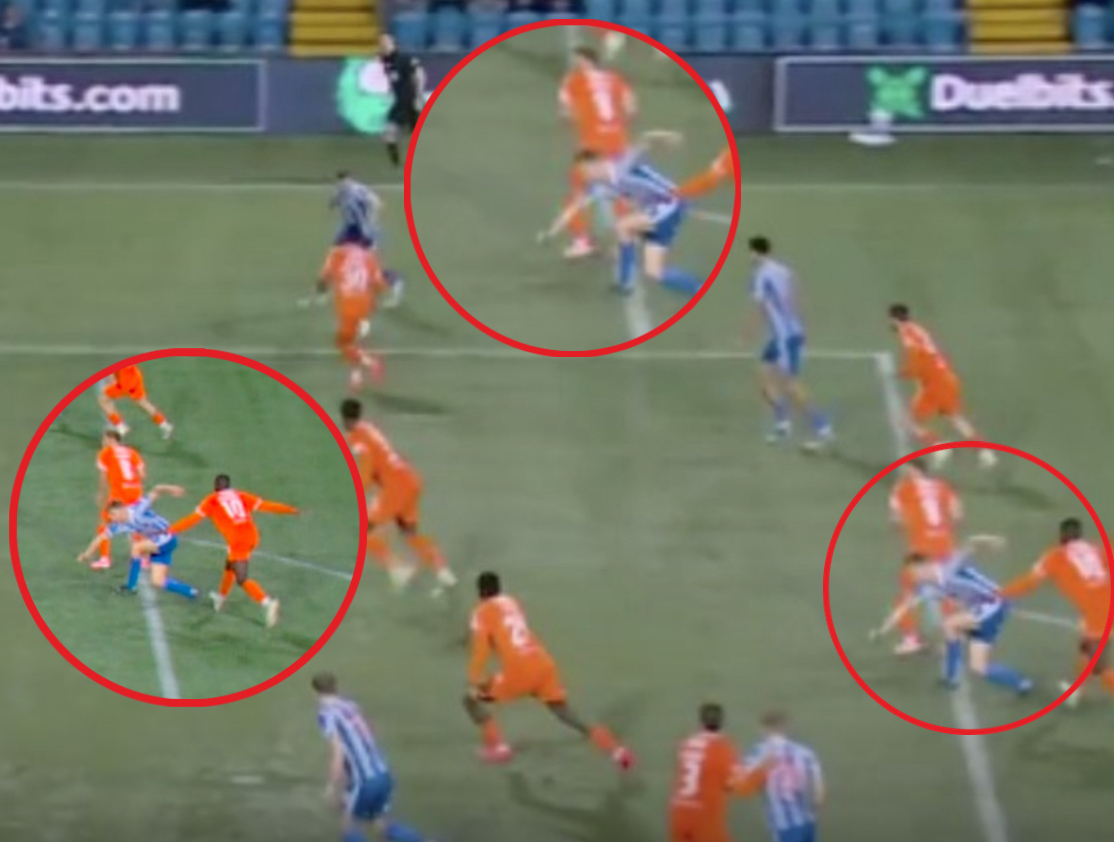
What should have been a routine league fixture between Rangers and Kilmarnock has instead exploded into one of the most contentious refereeing controversies of the season. A single incident — involving Rangers midfielder Mohamed Diomande inside the penalty area — has dominated headlines, phone-ins, social media timelines and pub debates up and down the country.
Supporters, pundits and even neutrals were united in disbelief as play continued after what appeared, to many watching, a stone-wall penalty challenge. Slow-motion replays were shared within seconds. Screens were frozen. Circles were drawn. Former referees weighed in. Fans demanded answers.
Those answers finally arrived.
In an official response that has done little to calm the storm, the SPFL released a statement explaining why a penalty was not awarded — despite, crucially, acknowledging that contact did occur.
And that explanation has only poured more fuel on an already raging fire.
This is the full story of the incident, the decision, the SPFL’s reasoning, and why so many believe Scottish football has a serious officiating credibility problem.
The moment that changed the match
Midway through the second half, Rangers were pushing. Kilmarnock were organised, aggressive, and clearly intent on disrupting rhythm in midfield. The ball broke into the box following a quick exchange, and Mohamed Diomande surged forward, attempting to shield possession and pivot away from pressure.
What happened next occurred in less than a second.
A Kilmarnock defender lunged in from the side. Another closed from behind. Diomande was clipped. His momentum stopped. His legs tangled. He went to ground.
No whistle. No signal. Play on.
Ibrox erupted — not with celebration, but with fury.
From the stands it looked blatant. From replay angles it looked worse.
Hands were raised. Players appealed. The referee waved play away, and VAR, after a brief check, declined to intervene.
The match continued — but the controversy was only just beginning.
Why fans were convinced it was a penalty
There are a few reasons why this decision struck such a nerve.
First, contact was undeniable. Even those defending the decision rarely claim there was “no touch.” Instead, debates focused on how much contact and whether it was sufficient.
Second, Diomande had inside position. He was goalside. He was attempting to control the ball. He was not initiating the contact. By the very letter of the Laws of the Game, that combination usually leads to fouls being given elsewhere on the pitch.
Third, consistency — or the perceived lack of it — is what truly outraged supporters. Many fans pointed to penalties awarded in previous SPFL matches for arguably lighter contact. Comparisons flooded social media within minutes.
The question quickly became unavoidable:
If that isn’t a penalty — what actually is?
The SPFL steps in
After hours of backlash and growing pressure, the SPFL issued an official statement intended to clarify the decision-making process.
Rather than putting the controversy to bed, the statement intensified criticism.
The league confirmed that referees and VAR officials reviewed the incident and concluded that while there was contact, it was deemed “insufficient and incidental” and therefore did not meet the threshold for a clear and obvious error.
That phrase — clear and obvious — is the cornerstone of VAR protocol. And it has now become the lightning rod for fan anger.
Because for many watching, the error felt exactly that: clear and obvious.
Breaking down the SPFL’s reasoning
According to the SPFL explanation, the decision hinged on three main factors:
- Nature of contact
Officials felt that the contact occurred as both players were contesting space, rather than as a direct attempt to impede progress illegally. - Expectation of physicality
The statement referenced the “expected level of contact in football,” particularly in congested penalty-area situations. - Diomande’s movement
It was suggested that Diomande may have already been losing balance due to his own momentum prior to the contact.
On paper, these points may sound measured. In reality, they have been torn apart.
Why the explanation has left fans furious
The primary anger isn’t just about this incident. It’s about what the explanation represents.
Fans argue that the SPFL has effectively set a precedent where contact can exist, balance can be lost, and possession can be disrupted — yet a foul still not be given because it doesn’t rise to some vaguely defined threshold.
That threshold changes. Constantly.
On one weekend, similar contact is a penalty. On the next, it’s waved away. And supporters feel they are being asked to accept explanations that shift depending on the outcome.
The phrase “expected level of contact” has particularly enraged fans. Many ask: expected by whom? At what standard? And why does that expectation seem to fluctuate so dramatically?
VAR: Solution or scapegoat?
VAR was introduced to reduce these controversies. Instead, many believe it has simply reframed them.
In this case, VAR looked, reviewed, and backed the on-field decision. The SPFL insists that VAR did exactly what it was designed to do: intervene only when there is a clear mistake.
But critics argue that VAR has become too protective of referees, operating less as a correctional tool and more as a confirmation system.
If obvious penalties are not overturned because officials cannot agree on clearness, then fans are left wondering why VAR exists at all.
The Rangers perspective
From Rangers’ point of view, the frustration is easy to understand.
At elite levels, games can hinge on moments. One decision can change momentum, confidence, and final outcomes. When players see contact that stops a promising attacking move and receive nothing, belief in fairness erodes.
Former players have spoken about the psychological impact: attackers hesitate, defenders gain confidence, and referees — consciously or not — influence how matches unfold.
For Rangers supporters, this wasn’t just a missed decision. It was a defining moment that may have altered the direction of the game itself.
Kilmarnock’s silence — and strategy
Interestingly, Kilmarnock have largely stayed silent. From their perspective, they defended robustly, stayed compact, and played within what they believed the referee allowed.
Clubs rarely complain when decisions go in their favour — and that silence speaks volumes about the imbalance in football discourse.
Officials are required to explain themselves. Players and clubs never are.
A wider problem in Scottish football
This incident has reopened uncomfortable discussions about refereeing standards in Scotland.
Fans complain not about isolated mistakes — mistakes are inevitable — but about explanations that feel detached from what supporters actually see with their own eyes.
When officials acknowledge contact yet deny fouls, trust breaks down.
Trust, once lost, is hard to regain.
What happens next?
The SPFL insists protocols were followed correctly. No further action will be taken. The result stands.
But the damage lingers.
Every upcoming decision will now be judged against this one. Every penalty appeal will be replayed side by side. Every explanation will be questioned.
And unless standards become clearer — and more consistent — the noise will not die down.
Final thought
This wasn’t just about Mohamed Diomande. It was about belief — belief in fairness, belief in consistency, and belief that fans are not being gaslit by technical jargon.
The SPFL says it got the decision right.
A huge section of Scottish football believes otherwise.
And until that gap closes, statements like this won’t calm the storm — they’ll only make it louder.





Post Comment