WILFRED NANCY ACCUSED OF THROWING CELTIC PLAYERS ‘UNDER THE BUS’ AFTER FIRST GAME IN EXPLOSIVE INTERVIEW,IT MADE CELTIC FANS MORE ANGRIER
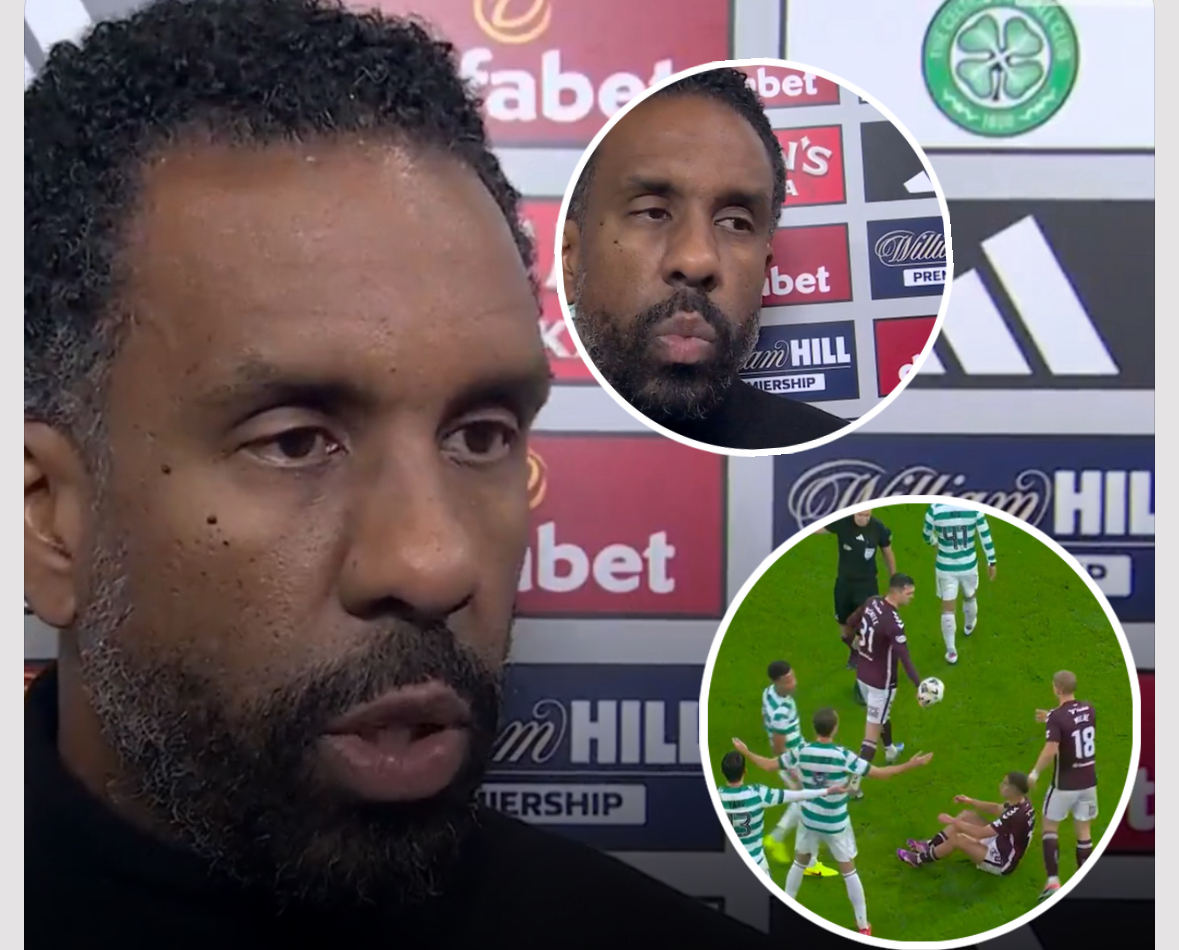
Wilfried Nancy’s first afternoon in the Celtic dugout has already become one of the most talked-about managerial debuts in recent Scottish football memory — but not for the reasons he or the club will have wanted. A 2-1 defeat to Hearts at Parkhead left Celtic’s title hopes dented and a section of the support furious. The fallout has been intensified by an explosive post-match media cycle: snippets from Nancy’s pre-match interview and his on-bench demeanour were seized on by fans and pundits alike, with accusations that the new boss “threw players under the bus” and a social-media storm of ridicule and anger.
What happened on the day
Celtic went into the fixture under the weight of expectation: a high-profile managerial appointment, a packed Parkhead and the hope that a fresh approach might snap a wobble in form. Instead, Hearts claimed a 2-1 victory — Claudio Braga opened the scoring and Oisin McEntee added a second from a corner, with Kieran Tierney’s late effort only providing consolation. The match itself looked like a tough baptism for Nancy: Celtic were described in match reports as disjointed and susceptible from set-pieces, and the loss leaves questions about how quickly the team can assimilate his methods.
The interview that provoked ire
In the days leading up to kick-off Nancy gave his first substantive interviews as Celtic manager. He spoke warmly about the club’s history, the supporters’ passion and his footballing philosophy — promising an attacking, front-foot style while also promising to make the team “disgusting” to play against in terms of defensive ruthlessness. But some of his comments — framed by certain outlets and replayed across social platforms — were read as public criticism of the squad’s mentality and preparedness. That framing, amplified by opinion pieces and highlight reels online, has fuelled the narrative that Nancy publicly questioned his players in advance rather than handling matters internally.
Optics and online fury: the ‘tactics board’ moment
Optics matter in football, and a small moment captured during the game has become emblematic of broader displeasure. Photographs and short video clips showed Nancy adjusting magnets on a tactics board behind the bench immediately before Hearts extended their lead. That image — shared widely with mocking captions — fed a chorus of criticism that he looked out of touch, distracted, or theatrically overcomplicated in his approach at a moment when the team needed decisive intervention. The online reaction ranged from sarcastic trolling to heated accusations that the manager had already lost the dressing room. One tabloid account ran with the story of him being “brutally trolled” for “playing with a tactics board” at the crucial moment.
Did Nancy really throw players under the bus?
“Throwing players under the bus” is an emotionally charged phrase that implies a manager publicly blames, criticises or undermines his own squad — often in a way that damages morale. In this case, evidence is mixed. Nancy’s pre-match language — stressing accountability and demanding higher standards — was interpreted by some as a veiled rebuke. However, his formal post-match comments were measured, talking about areas for improvement and the reality of a difficult debut. The gulf between direct quotes and their online reinterpretation is important: many fans reacted to headlines and clipped moments rather than the full interview context, creating a distortion that resembles modern media “pile-ons.” That pattern — a manager’s every gesture or phrase picked apart within minutes — is now standard in elite clubs with large, passionate followings.
How fans and pundits have responded
The reaction split neatly into two camps. One tranche of supporters and commentators were furious, seeing Nancy’s comments and his sideline composure as symptomatic of a lack of leadership at a crucial point; they accused him of being too public with his critiques and too theatrical in his matchday behaviour. Social media threads — the modern pressure cooker — amplified clips and sensational takes, with some fans demanding explanations and others calling for patience.
On the other side, a cohort urged calm. They argued this was a single match in a long season, and that Nancy’s interview — when read in full — showed a manager trying to set standards and communicate honestly with supporters. They warned that hasty judgment based on soundbites would be damaging if it forced Celtic into knee-jerk decisions. These voices stressed the need for the board and coaching staff to back the new manager publicly and allow him time to implement his ideas in training and recruitment.
Tactical reality: were Celtic tactically at fault?
Beyond the media circus, the match footage offers a clearer picture of the tactical problems that led to the defeat. Hearts exploited moments of passive defending at set-pieces and seized the initiative when Celtic misread offside calls; there were also signs of players still adapting to new positional instructions. The second goal — a header from a corner — underlined issues with marker assignments and concentration. If anything, the evidence points to a squad in transition, which is rarely remedied overnight. The debate now among analysts is whether Nancy’s preferred setup requires signings, or whether the same players can execute his system once they have absorbed the tactical nuances.
The managerial optics problem: communication vs. confrontation
Modern managers must thread a needle: they have to be candid enough to set standards but diplomatic enough not to publicly alienate players. Nancy’s media approach — candid, confident, and occasionally provocative — is part of his profile. But the split reaction shows the dangers of speaking plainly on record in a hyper-reactive media ecosystem. Clubs with demanding fanbases may prefer a more insulated approach where internal critiques remain private; others benefit from managers who galvanise support through transparent messaging. The strategy Celtic pursue in the coming days — whether public displays of unity or continued media openness — will influence whether this episode becomes a footnote or a festering problem.
What the club should do now
Celtic’s board faces a choice: rally publicly behind Nancy to show stability and give him time, or step into the conversation with clarifying statements to placate anxious supporters. Historically, the most successful approach has been a blend: show confidence in the manager’s long-term project while acknowledging the heat of the moment and committing to targeted adjustments (perhaps on set-piece coaching, or in the short-term loan/transfer market). Transparency about plans for recruitment and coaching tweaks could calm nerves — silence, by contrast, risks letting gossip define the narrative.
Possible long-term consequences
If Nancy can rapidly translate his philosophy into consistent on-pitch improvement, the furore will likely recede — football fans are notoriously forgiving when victories come. But if the team’s performances remain inconsistent and media scrutiny intensifies, the trust deficit could grow. A manager’s early weeks are crucial for establishing authority in the dressing room; public controversies — even when driven by misinterpretation — can weaken that process. Equally, if Nancy’s methods demand change in personnel and recruitment, the board’s willingness to back him financially and structurally will be decisive.
Conclusion: heat, light — and perspective
The controversy surrounding Wilfried Nancy’s debut demonstrates how fragile managerial standing can be in the social-media era. A single defeat, combined with clipped interviews and an awkward on-bench image, has been stretched into a narrative of internal conflict. But the substantive questions remain footballing ones: can Nancy install his style, can the existing squad adapt, and will the board back a coherent plan? Celtic supporters — impatient and passionate by nature — will demand answers fast. For neutral observers, the wise course is to watch how Nancy responds on the training ground and in the transfer market over the coming weeks. That will say far more about his suitability than any trending clip ever could.
Sources: match reporting and analysis from The Guardian; Celtic FC’s official interview and press materials; coverage of fan reaction and on-bench optics in The Scottish Sun; fan-media reaction pieces from 67hailhail and The Edinburgh News.




Post Comment