REASON WHY GOAL WAS AWARDED DESPITE IT’S OFFSIDE HAS LEFT EVERYONE FURIOUS —SPFL RELEASES SHOCKING STATEMENT
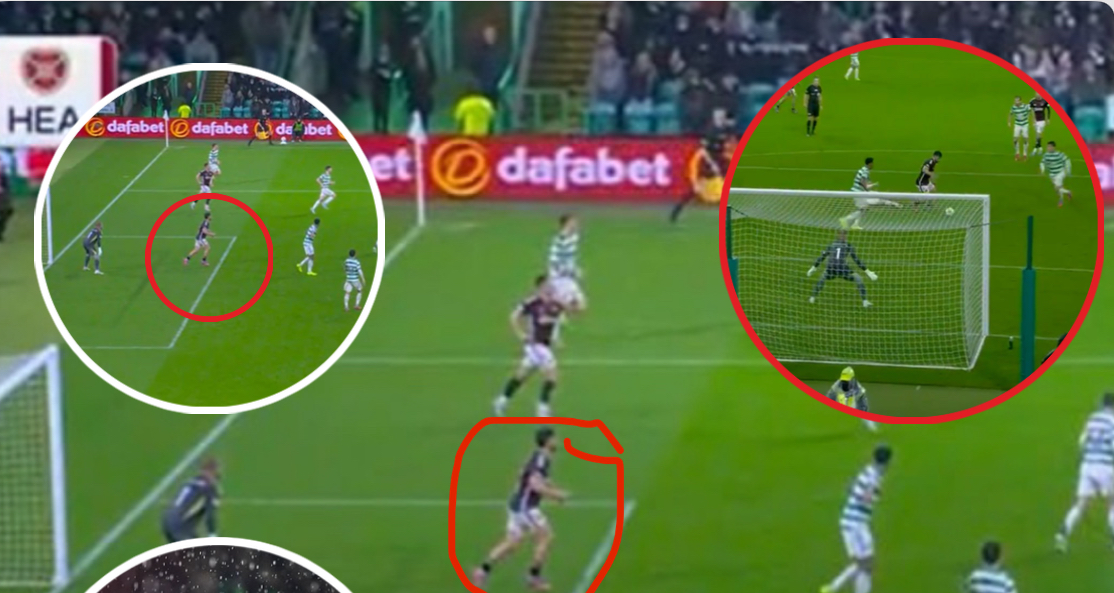
Celtic supporters were still venting long after the final whistle at Parkhead as Hearts edged a fiery 2–1 victory, but it wasn’t simply the defeat that dominated the post-match conversation. Instead, one moment — the decision to award a Hearts goal that many insist was plainly offside — has ignited a fresh refereeing storm, dragged VAR and assistant officials back into the spotlight, and left the Scottish Premiership facing another fierce credibility debate.
From the stands to social media, from phone-ins to fan forums, the same question echoed relentlessly: how on earth did that goal stand?
What followed only deepened the anger. Within hours, the SPFL issued an explanation of the decision — a statement that has since been branded “insulting”, “tone-deaf”, and “gaslighting” by furious Celtic fans who believe the answer raised more questions than it solved.
The flashpoint that changed the match
The incident occurred midway through the second half with the game finely balanced. Hearts played a quick ball in behind the Celtic defence, and as the cross was delivered, one Hearts attacker appeared — to the naked eye — to be clearly ahead of the last Celtic defender.
Parkhead collectively held its breath.
The flag stayed down.
The goal was awarded.
VAR reviewed — and still upheld it.
Instant outrage erupted inside the stadium. Boos rained down. Celtic players surrounded the referee, hands outstretched, pleading for an explanation. Television replays immediately flooded screens across the country, and within minutes screenshots were circulating online showing what looked like an obvious offside position.
For many supporters, this was not a “tight call”. This was black and white.
Why Celtic fans say it was “clearly offside”
The anger stems from three main factors that have been repeatedly cited by fans, pundits, and former players:
1.
The attacker’s positioning
Freeze-frame images shared online appear to show the Hearts forward leaning beyond the Celtic defensive line at the moment the ball was played. For many fans, this alone should have been enough to trigger an offside flag or overturn through VAR.
2.
Delayed flag confusion
Supporters understand the modern instruction to assistant referees: let play continue, then review. But that explanation cuts both ways. If officials are letting play run on because VAR will correct errors, fans ask why VAR then failed to intervene.
3.
Inconsistency with previous decisions
This is perhaps what fuels the deepest frustration. Celtic fans quickly pointed to prior matches where goals were disallowed for marginal offsides measured by millimetres, with lines drawn to the letter of the law. Against that backdrop, allowing a goal that appears far more obvious feels not just wrong, but inconsistently applied.
The SPFL’s explanation — and why it backfired
In response to the uproar, officials released a post-match clarification outlining the rationale behind the decision. According to the explanation, the goal stood because:
- The pass was judged to have come from a Celtic defensive deflection rather than a deliberate attacking pass.
- The Hearts player was considered to be level with the last defender at the moment possession changed.
- VAR determined there was no “clear and obvious error” to justify an intervention.
On paper, that may sound procedural. In practice, it has poured petrol on the fire.
Fans argue that a defensive deflection does not automatically reset offside unless it is a deliberate and controlled play — a distinction many believe was ignored. The “level with the defender” explanation also infuriated supporters who insist available angles show daylight between attacker and defender.
And then there’s the phrase that has become a lightning rod: “no clear and obvious error.”
To Celtic fans, it felt like officials were hiding behind protocol rather than engaging with what everyone could see.
“We’re not stupid”: supporter fury boils over
The reaction has been ferocious.
Social media platforms were quickly swamped with angry posts accusing officials of incompetence at best and bias at worst. Fan groups organised online petitions calling for greater refereeing transparency. Call-in shows crackled with rage as supporters demanded answers.
Many fans weren’t just upset about one decision — they felt insulted.
“Don’t tell us our eyes are lying to us,” was a common refrain.
“If that’s onside, then offside means nothing anymore,” said another.
Inside Parkhead, the mood turned toxic as chants aimed at officials drowned out attempts to rally the team late on. The sense of injustice seemed to drain belief from the stands — and from the players.
Impact on the match itself
It’s impossible to discuss the incident without acknowledging its effect on the game.
At 2–1 down following the disputed goal, Celtic were forced to chase the match with greater urgency, leaving themselves exposed at the back. Hearts, by contrast, grew in confidence, slowing play, managing possession, and frustrating the home side.
Momentum matters in football. So does belief.
Many fans are convinced that without that goal — without that decision — the match unfolds very differently. Whether or not that is strictly true, the perception alone has done damage.
VAR: Protector of fairness or amplifier of controversy?
The episode has reignited a long-running Scottish football debate: what is VAR actually for?
Introduced to eliminate glaring errors, VAR was meant to reduce contentious moments. Instead, critics argue it has merely shifted the battleground. Fans now expect near-perfect accuracy — and explode when it isn’t delivered.
The Hearts goal cuts to the heart of the problem:
- VAR had the tools.
- VAR had the time.
- VAR still arrived at a conclusion many believe is indefensible.
When technology designed to remove doubt creates more of it, trust erodes quickly.
Calls for transparency and accountability
In the wake of the controversy, calls have intensified for structural changes, including:
- Release of VAR audio to explain decision-making in real time
- Greater post-match accountability from referees
- Clearer public explanations of offside interpretations
- Independent oversight of officiating standards
Some supporters and pundits have even floated the idea of an expanded review panel for controversial decisions — though opponents argue that risks further politicising refereeing.
What this means for Celtic
From Celtic’s perspective, the timing couldn’t be worse.
Dropping points at home, losing ground in the title race, and watching a new managerial era overshadowed by refereeing chaos is far from ideal. While managers and players publicly avoid blaming officials, the dressing room frustration is hard to ignore.
Repeated controversies also risk creating a siege mentality — something that can either galvanise a squad or slowly corrode focus.
What this means for Scottish football
Beyond Celtic, this incident is another blow to the image of the league.
Sponsors, broadcasters, and neutral viewers all expect professionalism and clarity. High-profile controversies — especially those involving televised evidence that appears to contradict official explanations — undermine confidence in the product.
Scottish football has worked hard to modernise. Episodes like this threaten to undo that progress.
Conclusion: more than one goal, a wider problem
Hearts’ 2–1 win will stand in the record books. So will the goal.
But the deeper legacy of this match may be the renewed scrutiny now fixed on officiating standards across the league. Celtic fans are not just angry because they lost — they are angry because they believe the rules were bent, reinterpreted, or selectively applied before their eyes.
Until transparency improves, until explanations feel honest rather than procedural, these flashpoints will keep happening.
And every time they do, the trust gap between fans and the authorities grows wider.
For now, Celtic supporters remain furious, Hearts take the points, and Scottish football once again finds itself arguing not about goals scored — but about why one was allowed at all.







Post Comment