AFTER MUCH DELIBERATION THE FA HAVE FINALLY ISSUED THE PUNISHMENT FOR GIBBS WHITE DESPITE HE WASN’T AWARDED RED CARD DURING THE MATCH,FA IS BIAS
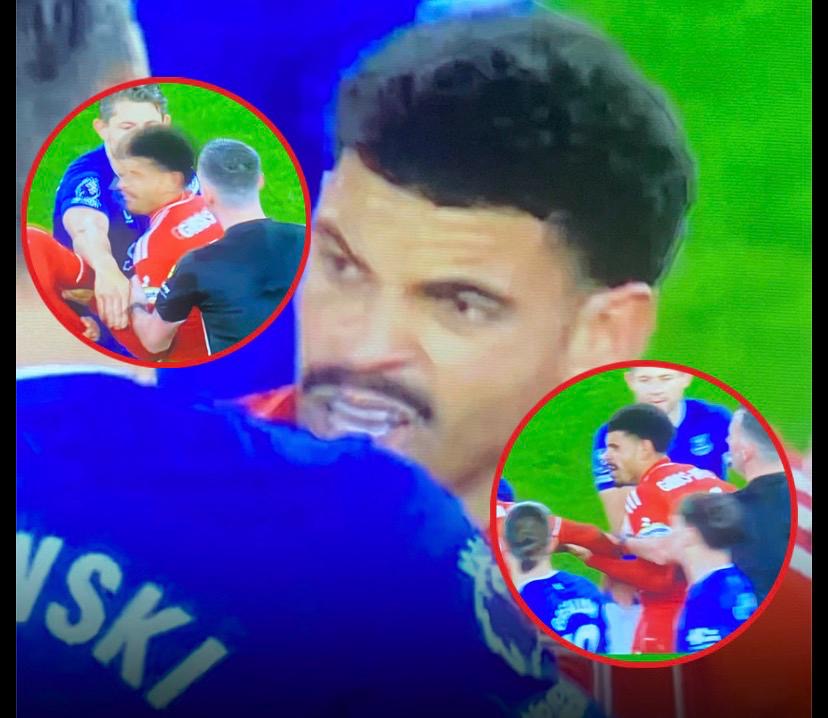
After days of speculation, heated debate, and mounting pressure from supporters and pundits alike, the Football Association have finally confirmed disciplinary action against Morgan Gibbs-White following his explosive altercation with Everton midfielder Kiernan Dewsbury-Hall. The decision comes despite the Nottingham Forest playmaker escaping a red card during the match itself — a moment that has since become one of the most controversial flashpoints of the Premier League weekend.
While Everton ran out deserved 3–0 winners on the day, attention has shifted sharply away from the scoreline and instead toward the FA’s handling of the incident, with accusations of inconsistency and institutional bias once again dominating football discourse.
A Match That Had Everything — Except Refereeing Clarity
Everton’s emphatic 3–0 victory should, by all rights, have been the headline story. The Toffees were disciplined, ruthless, and tactically sharp, turning in one of their most complete performances of the season. Goals at crucial moments, high intensity pressing, and a resolute defensive display ensured they were never truly threatened.
Yet for all Everton’s excellence, the match will be remembered less for the football and more for a highly charged confrontation that erupted midway through the second half.
Morgan Gibbs-White and Kiernan Dewsbury-Hall became entangled following a heavy challenge near the touchline. What began as a robust exchange quickly escalated into a physical confrontation that saw both players squaring up, pushing, and exchanging heated words. Television replays appeared to show Gibbs-White making aggressive contact, prompting widespread disbelief that no red card was shown.
The referee opted instead for a brief intervention, delivering stern words before allowing play to continue. VAR, to the astonishment of many, declined to upgrade the punishment.
Immediate Backlash From Fans and Former Players
Within minutes of the incident, social media exploded. Everton supporters were furious that what they perceived as violent conduct went unpunished, while neutral fans questioned how such incidents could repeatedly escape decisive action.
Former Premier League referees weighed in during live broadcasts, with several suggesting that the threshold for violent conduct had been dangerously lowered. Pundits questioned whether the laws of the game were being applied consistently or selectively, depending on the player or club involved.
Despite the outrage, the match continued, and Everton maintained their composure. Their three-goal triumph ensured the points were never in doubt — but even that emphatic win could not drown out the controversy.
FA Review Sparks Renewed Hope — And Renewed Frustration
In the days following the game, the FA confirmed that the incident involving Gibbs-White had been referred to a post-match review panel. That announcement alone was seen by many as an admission that errors had been made.
After “much deliberation,” the FA finally issued punishment for Gibbs-White, confirming retrospective action for his role in the altercation. While the governing body stopped short of acknowledging refereeing error in official terminology, the disciplinary ruling made it clear they believed the conduct warranted sanction.
However, for many fans, the damage had already been done.
Why Fans Are Crying Bias
The issue isn’t simply that Gibbs-White has now been punished — it’s the timing, the process, and the precedent.
Critics argue that retrospective justice does little to correct the immediate unfairness suffered during the match itself. Everton were forced to play against a player they believe should have been dismissed, potentially altering the flow of the game despite their eventual dominance.
More importantly, supporters have pointed to numerous similar incidents this season where retrospective bans were either not applied or inconsistently enforced. The perception, fair or otherwise, is that discipline depends less on actions and more on profile, reputation, or circumstance.
This has fueled accusations that the FA operates with a double standard — strict in some cases, lenient in others, and rarely transparent in its explanations.
The VAR Question That Refuses to Go Away
VAR’s role in the incident cannot be ignored. Designed to eliminate “clear and obvious errors,” the system once again finds itself at the center of controversy rather than clarity.
Replays of the confrontation were available in real time, yet no on-field review was recommended. That decision, in isolation, might be defensible if applied consistently. But fans quickly compiled examples of similar or lesser offenses that resulted in immediate red cards elsewhere.
The inconsistency is what frustrates supporters more than the decision itself.
Everton manager and players, to their credit, avoided inflammatory statements after the match. Instead, they focused on performance, professionalism, and results — a stance that earned them praise but also intensified calls for accountability elsewhere.
Gibbs-White Caught in the Crossfire
It’s worth noting that Morgan Gibbs-White himself has become something of a lightning rod rather than the core issue. The FA’s eventual punishment suggests that the governing body recognized wrongdoing, but also raises uncomfortable questions about why action wasn’t taken sooner.
Players operate in the moment. Governing bodies exist to provide clarity, structure, and fairness. When decisions feel improvised or reactive, players unfairly become symbols of a broken process.
Gibbs-White will now serve his punishment off the pitch — a consequence that does little to quell the anger of those who believe justice should be immediate and decisive inside the 90 minutes.
Everton’s Statement Win Overshadowed
Lost in the chaos is the fact that Everton were outstanding.
The 3–0 scoreline flattered no one. Everton pressed intelligently, defended aggressively, and capitalized on their chances with clinical precision. It was the kind of performance that sends a message to the rest of the league — disciplined, united, and hungry.
And yet, instead of discussing tactics, player ratings, or momentum gained from the win, Everton fans are once again forced into debates about refereeing standards and governance failures.
That, more than anything, may be the true injustice.
FA Credibility Under the Microscope Again
This incident adds to a growing list of situations where the FA’s processes have been questioned. While retrospective action may technically align with regulations, it does little to rebuild trust.
Football fans don’t demand perfection — they demand consistency.
When similar actions receive wildly different outcomes, belief in fairness erodes. Every delayed decision, every vague explanation, and every refusal to acknowledge mistakes deepens the sense that accountability exists everywhere except at the top.
Where Does the Game Go From Here?
As the league marches on, this episode will soon fade from headlines — replaced by the next controversial VAR call or disputed red card. But the underlying issue will remain.
Until the FA and officiating bodies provide clearer frameworks, transparent accountability, and consistent enforcement, accusations of bias will continue to follow every big decision.
Everton will take the points and move on. Gibbs-White will serve his punishment. But the debate — about fairness, integrity, and trust — is far from over.
Final Thoughts
Everton’s 3–0 victory deserved celebration. Instead, it became collateral damage in yet another refereeing storm.
The FA may believe it has closed the case by issuing punishment after the fact, but for many fans, that decision has only reopened deeper questions — questions about bias, competence, and whether the modern game is truly being officiated in the spirit of fairness.
Until those questions are answered convincingly, the noise will only grow louder.





Post Comment