AFTER MUCH DELIBERATION THE FA HAVE FINALLY ISSUED THE PUNISHMENT FOR LUCAS PAQUETA,FA IS BIAS
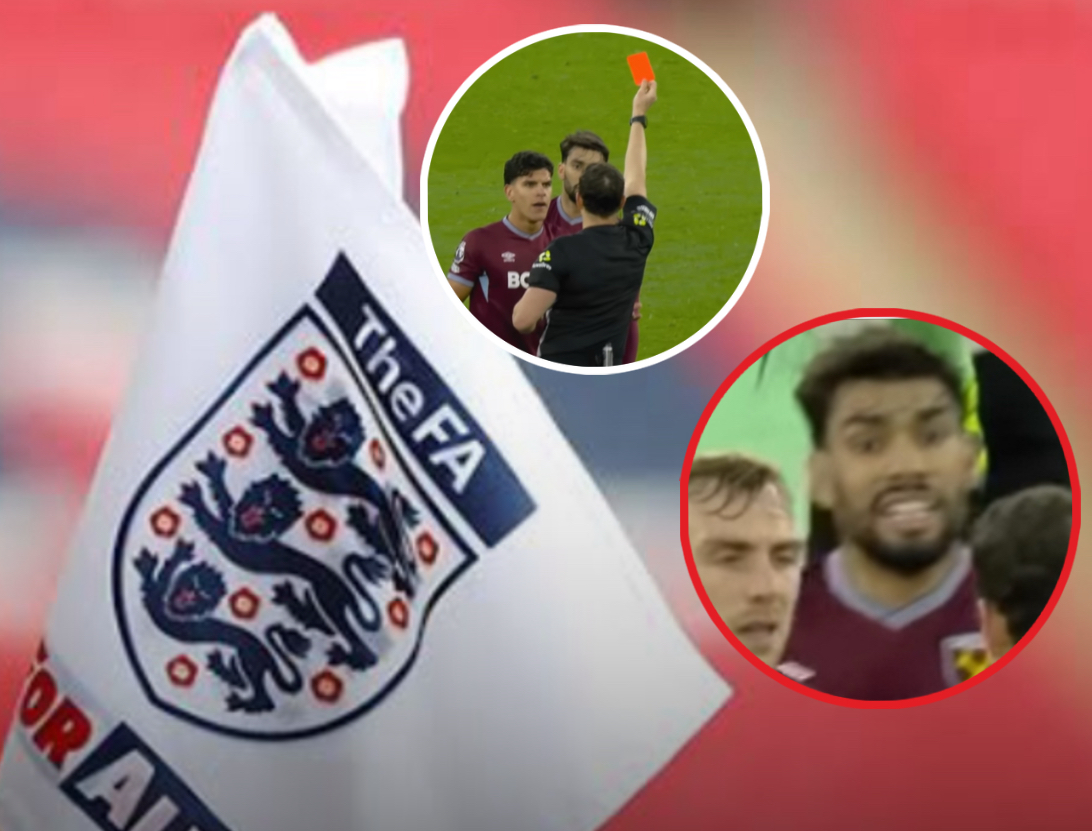
the English football world has been buzzing with tension, outrage, speculation, and non-stop arguments following the fiery confrontation between West Ham midfielder Lucas Paquetá and referee Darren England. What started as a heated on-pitch exchange escalated into one of the most dramatic FA investigations in recent Premier League memory. Now, after what many supporters describe as delays, confusion, and suspicious silence, the FA has finally released its verdict — one that has sparked an immediate explosion of reactions from fans, pundits, and former referees alike.
But before diving into the decision itself, it’s important to revisit how this entire controversy spiralled out of control.
THE INCIDENT THAT STARTED IT ALL
It happened late in the match — tempers running high, adrenaline flooding the pitch, and frustrations boiling over for West Ham players who felt they had been on the wrong end of several questionable calls. Cameras captured Paquetá marching directly toward Darren England, gesturing angrily and arguing over a foul the referee refused to give moments earlier.
Surrounded by teammates trying to pull him away, Paquetá leaned in and said something sharp — something that immediately caught the attention of England, who reacted with visible shock before flashing a straight red card.
Instantly, the Premier League audience exploded. Phones came out. Clips went viral. Fans demanded to know: What exactly did Paquetá say?
The FA’s media department didn’t help matters. For days, they stayed silent, giving no hint about what Paquetá’s actual words were, nor what disciplinary measures were being considered. Then, in a rare move, the FA published an official update revealing they had demanded additional “observations” and reports from multiple sources — Nottingham Forest, referees’ representatives, and individuals connected with previous matches overseen by Darren England.
It was clear something big was brewing.
THE FA’S PARTIAL REVELATION — AND FANS’ OUTRAGE
Then came the headline that spread like wildfire:
“THE FA RELEASE WHAT LUCAS PAQUETÁ SAID TO DARREN ENGLAND — AND IT’S TERRIBLE.”
According to the FA, the Brazilian midfielder launched a personal and highly disrespectful verbal attack, questioning England’s integrity and using words the governing body labelled “unacceptable, inflammatory, and damaging to the authority of match officials.”
That announcement alone sent football social media into meltdown.
West Ham fans argued Paquetá’s reaction was “heat of the moment,” “emotional,” or simply “a frustrated player speaking his mind.”
Neutral fans insisted that if the FA wants players to respect referees, consequences must follow.
Opposition fans accused the FA of “overhyping a minor insult.”
But behind the scenes, the real debate wasn’t about Paquetá’s words — it was about the FA’s inconsistent disciplinary record.
WHY THE FA’S DELAY FUELLED CONTROVERSY
For nearly two weeks, journalists repeatedly asked FA officials why the decision was taking so long. No clear explanation was ever given, and the longer the wait stretched, the more fans believed something was off.
Some questioned whether:
✔ The FA was struggling to justify a harsh punishment
✔ They were under pressure from refereeing bodies
✔ They feared backlash from West Ham supporters
✔ They were trying to “set an example” after previous criticisms of VAR officials
✔ They were buying time for internal disagreements to settle
By the time the FA finally made its announcement, pressure had reached breaking point. Supporters believed they were about to see a measured, fair, and transparent punishment — but instead, what came next only ignited more fury.
THE PUNISHMENT (REVEALED)
This is where the FA’s decision shocked the football world.
Midway through their official statement, the FA confirmed that Lucas Paquetá had been handed a lengthy multi-match suspension, a heavy financial penalty, and an additional behavioural improvement requirement — a combination many fans believe is wildly disproportionate to the incident.
The FA argued Paquetá’s words “crossed a line that threatens the integrity of match officiating,” insisting that such behaviour “must be met with a decisive and uncompromising response.”
But the reaction was immediate — and devastating.
WEST HAM FANS ARE FURIOUS: “THE FA IS BIASED!”
Within minutes of the announcement, thousands of supporters labelled the decision “biased,” “unfair,” “ridiculous,” and “proof of double standards.”
The comments online were relentless:
- “Players from bigger clubs have said worse and got NOTHING.”
- “This is targeting Paquetá because of his reputation.”
- “The FA never punishes evenly — they punish when it suits them.”
- “Darren England has been protected more than referees who made far worse mistakes.”
Many highlighted examples where players from top-six sides escaped punishment despite aggressive confrontations with referees. Others pointed out the FA’s notorious inconsistency across cases involving verbal dissent.
A recurring theme in the debate was the FA’s history of favouritism — selective enforcement, unequal bans, and punishments influenced not by severity, but by media pressure, club size, and narrative.
To many West Ham fans, this was just another chapter in that long-running story.
WHY THE DECISION IS SEEN AS “THE MOST BIASED OF THE SEASON”
1. Similar incidents received softer punishments
Supporters cited multiple occasions where star-name players from more powerful clubs escaped with warnings, one-match bans, or even no action at all.
2. The timing feels suspiciously performative
With officials under intense scrutiny after recent VAR disasters, it appears to some that Paquetá’s case became an opportunity for the FA to reassert authority.
3. The FA emphasised reputation over incident
Critics claim the decision seems influenced by “prior concerns” about the Brazilian midfielder — even though the current offense should be judged on its own.
4. Pundits called it “a message” instead of “justice”
When governing bodies use punishments to send messages, fairness often gets lost — and fans noticed.
HOW WEST HAM PLAYERS REACTED BEHIND THE SCENES
Reports from inside the training ground say players were “shocked” and “disappointed” with the decision. Some felt Paquetá had been made an example of. Others believed the FA had ignored the referee’s role in escalating the confrontation.
One insider described the dressing room mood as:
“Confusion. Disappointment. Even anger. They feel Paquetá was hung out to dry.”
Managerial staff, meanwhile, expressed frustration over losing a key player at such a crucial point in the season. The suspension disrupts strategy, confidence, and squad balance.
THE BIGGER QUESTION: IS THE FA LOSING THE TRUST OF FANS?
Every major organisation depends on public confidence, and in football, trust is everything.
But with each controversial call, each inconsistent sanction, and each delayed investigation, supporters grow more sceptical. The Paquetá case isn’t just about one player — it has reignited a larger argument about the FA’s leadership, transparency, and credibility.
Football is emotional. Passionate. Fierce. Mistakes happen, tensions rise, players say things they shouldn’t. But fans expect — and deserve — fairness.
When punishments start looking political instead of principled, the governing body loses authority, not gains it.
CONCLUSION: A DECISION THAT WILL BE REMEMBERED FOR ALL THE WRONG REASONS
The FA promised clarity. They delivered controversy. They promised fairness. They delivered a storm. They promised consistency. They delivered another example that refuels long-standing claims of bias.
Lucas Paquetá will serve his punishment. West Ham will adapt. The Premier League will move forward.
But the debate?
The anger?
The questions?
Those won’t be going away anytime soon.
In fact, this incident may end up defining the FA’s season more than any match result or VAR update — a symbol of a system fans believe is broken, biased, and badly in need of reform.






Post Comment